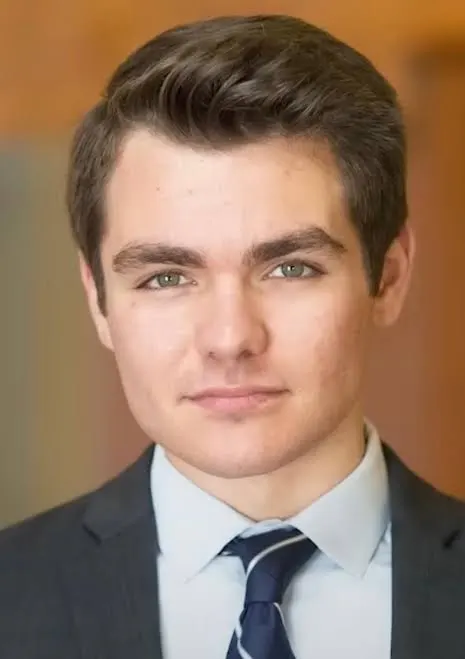
Introduction: Three Names, One Conversation
In 2025, the conservative media and political commentary world is witnessing a major collision of personalities: Nick Fuentes, a far-right activist and livestreamer with white-nationalist ties; Mark Levin, a longtime conservative radio host and media figure; and Tucker Carlson, the former Fox News star turned independent commentator. Their interactions, alliances, and conflicts reveal deep fault-lines in the American right.
Who Is Nick Fuentes?
Nick Fuentes (born 1998) is a far-right political commentator and influencer. He leads the “America First” movement and is widely known for promoting white-nationalist, antisemitic, anti-LGBTQ, and Christian-nationalist views.
- He began as a livestreamer around 2017 and built a dedicated youth-oriented following.
- His platform was de-platformed on several social media networks for hate-speech violations.
- He has publicly critiqued mainstream conservatives and the GOP establishment, seeking to shift the movement towards more radical positions.
Who Is Mark Levin?
Mark Levin is a well-established figure in conservative media: editor-in-chief of Conservative Review, host of The Mark Levin Show, and influential polemicist.
- Known for his strong support of Israel, constitutional originalism, and free-speech rhetoric.
- Though once skeptical of Donald Trump, he moved to endorse him and aligned with the broader Trump-era conservative coalition.
- He represents the more “mainstream” end of the conservative commentary spectrum, contrasting sharply with figures like Fuentes.
Who Is Tucker Carlson?
Tucker Carlson (born 1969) gained prominence as a Fox News host, then turned independent commentator with his own podcast/show since 2024.
- Known for provocative stances, critique of elite conservatism, skepticism towards U.S. foreign policy, and recent controversial content.
- In October 2025, he interviewed Nick Fuentes — a move that triggered widespread backlash among Republicans, Jewish organizations, and media critics.
How They Intersect — & Why It Matters
- Carlson’s Fuentes Interview:
- In late October 2025, Carlson hosted Fuentes on his podcast, where Fuentes expressed antisemitic statements and praised Joseph Stalin.
- This interview sparked uproar among GOP leaders and think tanks, who accused Carlson of platforming dangerous extremism.
- The controversy illustrates how fringe figures like Fuentes are penetrating broader conservative media networks.
- Levin as Counterpoint:
- While Levin remains within the mainstream of conservative commentary, Carlson’s move widens the ideological range of commentary accepted by some segments of the right.
- Levin’s stances, particularly his support for Israel and constitutional conservatism, contrast sharply with the extremist impulses Fuentes embodies.
- Movement Dynamics & The GOP:
- These intersections highlight a growing tension in the conservative movement: Should figures with extremist ties be platformed?
- Carlson’s platforming of Fuentes raises questions about the boundaries of acceptable discourse within conservatism.
- Media influence: The trio’s interactions reflect how commentary figures shape political narratives, mobilize youth, and challenge or reinforce party orthodoxy.
Implications for 2025 and Beyond
- Party Identity Crisis: The GOP is wrestling with its identity – traditional conservatism (represented by Levin) vs. populist and radical currents (exemplified by Fuentes and Carlson).
- Media Ecosystem Shift: Carlson’s independent platform breaks from broadcast norms; Fuentes leverages de-platforming to claim martyr status; Levin remains anchored in established media.
- Public Perception & Extremism: The Carlson-Fuentes episode forced public attention on how extremist views may be normalized when mainstream voices lend them prominence.
- Future of Free Speech vs. Hate Speech: Carlson defended his decision as free-speech advocacy; critics saw it as legitimizing hate. The debate will likely evolve with legal, corporate, and political ramifications.
Final Thoughts
The triangle of Nick Fuentes, Mark Levin and Tucker Carlson illuminates fault-lines in modern conservatism: between establishment and insurgent, between mainstream commentary and extremist fringe, and between media as gatekeeper and media as disruptor. As these figures continue to interact and conflict, the broader right-wing media landscape — and by extension, U.S. political discourse — will shift accordingly.
Recent major stories on Fuentes, Carlson & the GOP’s antisemitism debate