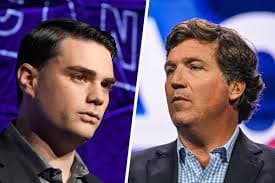
The conservative media ecosystem is once again facing internal tension and public scrutiny as figures like Ben Shapiro, Tucker Carlson, and organizations such as Turning Point USA (TPUSA) find themselves pulled into a fast-moving political controversy centered on Arizona. With reporting from outlets like HuffPost amplifying the dispute and commentary from voices including Rachel Campos-Duffy, the episode highlights growing fractures within the American right ahead of the 2025 political cycle.
What Sparked the Latest Conservative Media Scandal?
The controversy erupted following a series of sharp disagreements over messaging, election strategy, and populist rhetoric tied to Arizona politics. Arizona, a crucial swing state, has become ground zero for ideological clashes between traditional conservatives, populist influencers, and media personalities with massive digital followings.
Reports and opinion pieces published by HuffPost framed the situation as evidence of a broader identity crisis within conservative politics—particularly between establishment-leaning commentators and anti-institutional voices.
Ben Shapiro vs. the Populist Wing
Ben Shapiro, co-founder of The Daily Wire, has long positioned himself as a policy-focused conservative who emphasizes constitutional principles and electoral pragmatism. In recent commentary, Shapiro criticized what he described as “emotion-driven populism” that risks alienating moderate voters in battleground states like Arizona.
These remarks were widely interpreted as indirect criticism of personalities aligned with TPUSA and the post-Fox News version of Tucker Carlson, who has embraced a more anti-establishment tone since leaving cable television.
Shapiro’s comments ignited backlash across conservative social media, where critics accused him of being out of touch with grassroots voters.
Tucker Carlson’s Influence After Fox News
Since departing Fox News, Tucker Carlson has operated with fewer institutional constraints, allowing him to challenge both Democrats and fellow conservatives. Carlson has frequently questioned U.S. foreign policy, corporate influence, and the Republican Party’s direction—positions that resonate strongly with younger, populist audiences.
In the Arizona controversy, Carlson-aligned narratives emphasized voter distrust, elite capture, and media manipulation. These themes directly clashed with Shapiro’s emphasis on credibility, electoral math, and messaging discipline.
TPUSA and Arizona’s Political Battleground
Turning Point USA (TPUSA), founded by Charlie Kirk and headquartered in Arizona, became an indirect focal point of the controversy. TPUSA has invested heavily in campus activism, voter outreach, and populist conservative messaging, making it deeply influential in Arizona politics.
Critics, including some conservative commentators, argue that TPUSA’s rhetoric sometimes fuels polarization rather than coalition-building. Supporters counter that the organization energizes disengaged voters and challenges political complacency.
Arizona’s tight elections magnify these disagreements, turning internal debates into public flashpoints.
Rachel Campos-Duffy Enters the Conversation
Rachel Campos-Duffy, a Fox News host and conservative commentator, added fuel to the controversy through on-air remarks and social media posts defending populist activists while criticizing what she called “media-friendly conservatism.”
Her comments were widely shared, drawing praise from grassroots activists and criticism from centrists who accused her of deepening internal divides. Campos-Duffy’s involvement highlighted how media personalities increasingly act as political actors rather than neutral commentators.
HuffPost and the Media Narrative
Coverage from HuffPost framed the dispute as a “civil war” within conservative media, portraying figures like Shapiro and Carlson as symbols of competing visions for the American right. Conservative critics accused HuffPost of exaggerating the conflict to weaken Republican unity ahead of national elections.
Still, the reporting amplified public awareness of ideological rifts that had previously played out mostly online.
Why Arizona Matters So Much
Arizona’s importance cannot be overstated. With razor-thin margins in recent elections, the state represents a testing ground for conservative strategy:
- Moderate messaging vs. populist outrage
- Traditional media vs. independent platforms
- Coalition-building vs. ideological purity
What happens in Arizona could shape Republican approaches nationwide.
Broader Fallout for Conservative Politics
The Ben Shapiro–Tucker Carlson divide reflects a larger question facing conservatives in 2025:
Should the movement prioritize persuasion and institutional trust, or lean into disruption and anti-establishment energy?
As social media amplifies every disagreement, internal debates increasingly become public spectacles—creating both engagement and risk.
What Comes Next?
While no formal split has occurred, the controversy underscores unresolved tensions that are likely to resurface during the election season. Arizona will remain a focal point, and media figures will continue to shape political narratives as much as elected officials.
For voters, the episode offers a rare behind-the-scenes look at how ideology, media power, and political strategy collide in modern American politics.